It’s delivery day at Pat’s Pantry, and box upon box of produce is being carried through the door.
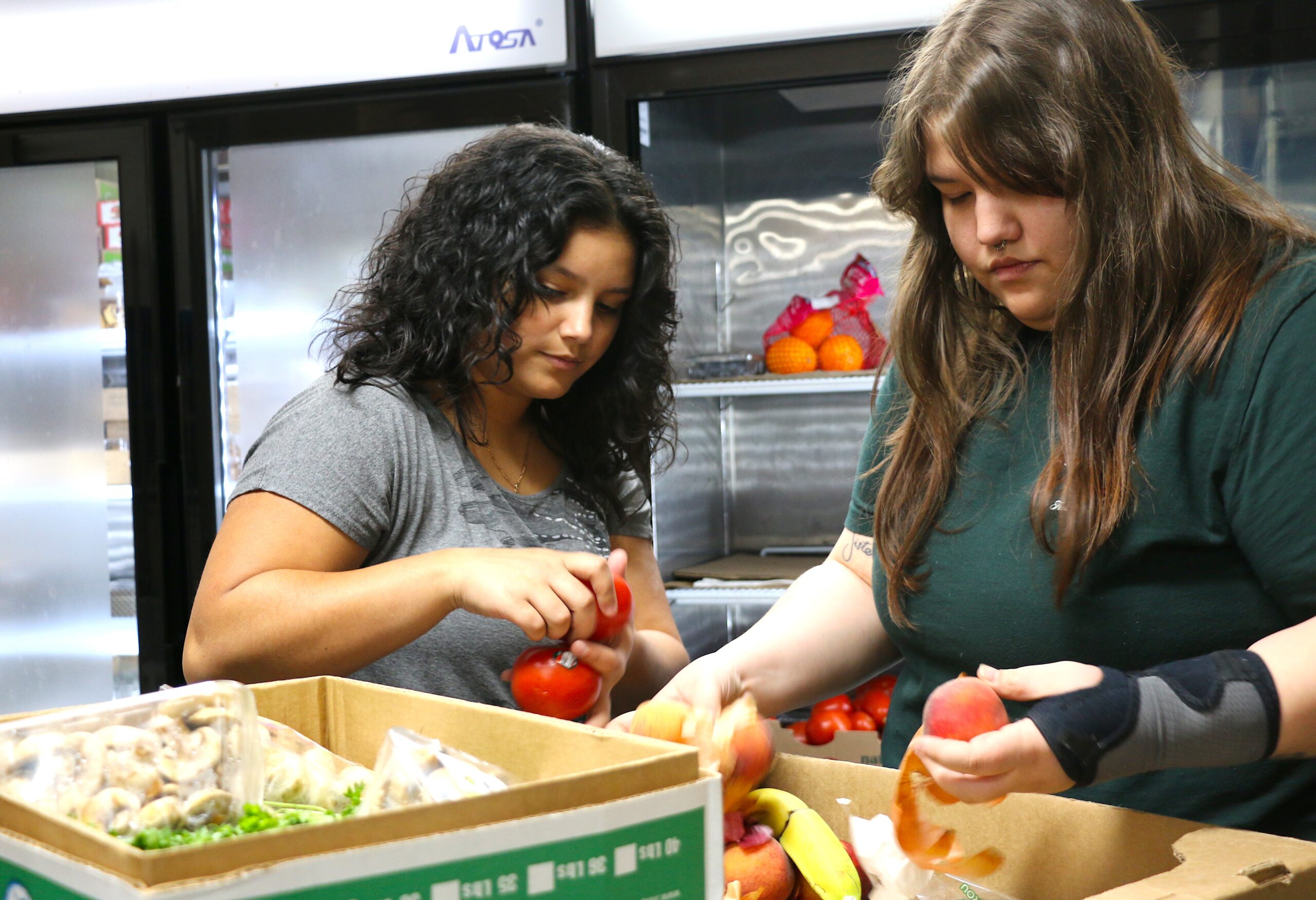
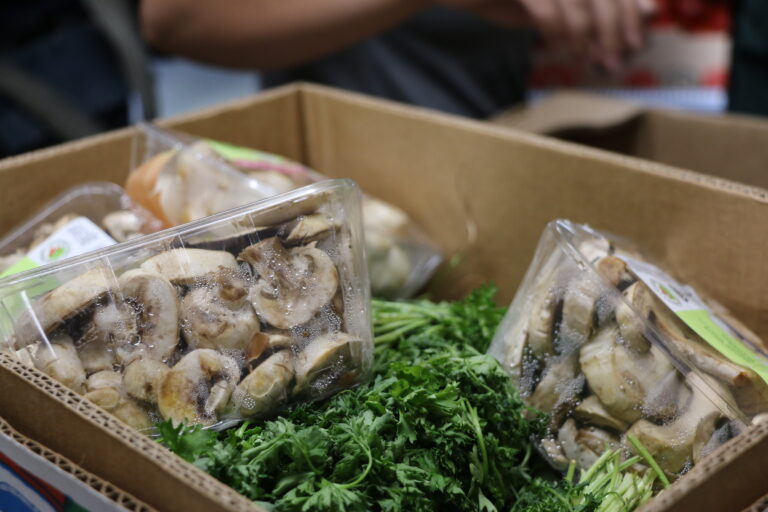
Miranda and Sophia are inside, ready to unpack countless cucumbers, mounds of mushrooms, pounds of potatoes, pineapples, nectarines, and more—donated from nearby grocery stores—into two large, stand-up refrigerators. The coolers sit alongside shelves stocked with multigrain breads and baguettes, oatmeal, tea, rice, and other foodstuffs.
In a day or two, many of these items will be shared with families to take home at no cost. Pat’s shelves will become emptier—and neighbours’ cupboards and fridges will become fuller—before the nourishing process begins all over again.
“Food insecurity is the root of all of the problems that we see in the world, in my opinion,” said Kelly-Anne Reyes, who manages Pat’s Pantry.
“We want to get to the root of the problem.”
Pat’s Pantry is a successful collaboration between Teen Stop Jeunesse (a youth-serving organization supported by United Way Winnipeg donors), a few local grocers like Freshco, Sobey’s and Safeway, and a handful of dedicated volunteers and staff—all working together to make sure food is available on a reliable and consistent basis for those who need it most.
Every week, participating grocery stores sign over their surplus produce and bakery items to Teen Stop staff, who pick them up and deliver them to the pantry. Neighbours sign up to collect groceries each Tuesday and Friday, with items divvied up based on what’s been received and the size of each family.
Pat’s Pantry has been sharing food with the neighbourhood in this dependable way since 2022.
“We saw the struggle was growing. More and more people were unable to fulfill their need,” Reyes, who is also Teen Stop Jeunesse’s executive director, recalled. “We felt like there was something we could do with connecting stores and bakeries and restaurants and help them minimize the amount of wasted food.
“And luckily, we were able to connect with them and make a space for all those food items that would otherwise be discarded to find their way into homes of people who are in need.”
Pat’s Pantry is one component of Teen Stop’s overall nutrition security program. In addition to distributing groceries to neighbourhood families, youth can also come into the St. Anne’s Road drop-in space for meals, snacks, and desserts—many made in-house in the organization’s kitchen. At least 200 of the centre’s 275 daily visitors (both adults and kids) have at least one touchpoint with food.
The centre is a steady source of food for Winnipeggers at a time when hunger is increasing at a staggering rate.
Currently, 60,000 people in our province use food banks every month—nearly 50 per cent of them with kids under 18 years old at home.
Reyes said the numbers echo what she and her team experiences at Teen Stop.
Most young people who walk through their doors are hungry.
“Over 90% of the youth that access Teen Stop’s programs here struggle with food security on a daily basis,” she said. “(They’re) often not eating again until they come back to our centre to access more food.”
People who aren’t getting enough to eat are vulnerable to a number of negative impacts, from increased levels of anxiety and depression and lower self-esteem to nutrient deficiencies, chronic fatigue, and cognitive decline.
“When you’re struggling with something like food insecurity, there’s so many other things that you’re leaving to the wayside,” said Reyes. “If you’re feeling hungry and uncomfortable and your stomach pains and you’ve got brain fog, you don’t have the proper nutrition to make your body function the way it is intended to.”

Studies are as clearly defined on the other side of the plate as well. It’s fully established that food security is a critical component of improving physical health, mental health, and overall well-being.
Children learn better in school, parents are able to make decisions more clearly, people’s daily stress is reduced, and confidence in the future is rekindled when there’s space to start thinking beyond the next meal.
It’s precisely how Pat’s Pantry hopes to create lasting change with every culinary connection they make.
“When people realize that this is going to be an ongoing support that they can access, now this immediate thing that they’re looking to solve becomes something they can kind of check off their list,” said Reyes. “(When you feel more food secure), there is room for obstacles to surface that people can share, and that often leads us to be able to help them overcome so much more in life.
“Over time, people carry themselves a little higher. They’re a little bit more chipper—like they’re just feeling like they’re going to overcome whatever it is that they’re facing.”