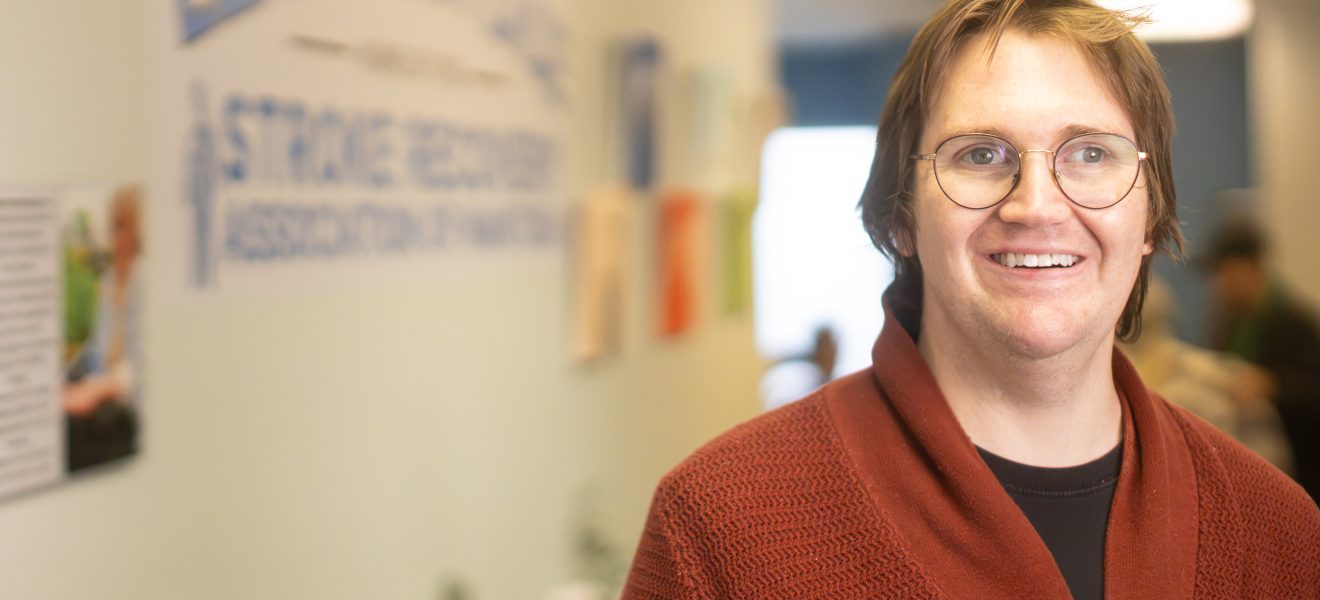
Matt MacNeil was in disbelief when he learned he had suffered a stroke at 29.
“I had complete left-side paralysis,” Matt said. “I’ve gained back most of my left leg function, but the left arm has not fully recovered.”
Matt first found support from the Stroke Recovery Association of Manitoba in 2017, the year of his stroke. Today, he finds comfort and purpose through the organization by giving back and helping other stroke survivors navigate their recovery journeys.
“I know how fortunate I’ve been with my recovery,” he said. “So, to be able to help people out who are a little worse off than I am and give them encouragement or help them learn some new skills—it’s been great.”
Matt now serves on the organization’s Board of Directors and leads its Young Stroke Survivors’ group, where topics centre on personal experiences, questions, and support. Conversations are participant-driven, so everyone feels heard, understood, and uplifted.
“To get moving and be with this community, it's inspiring. It's fun. It just fills me with joy.”
Matt also volunteers at Riverview Health Centre, where he connects with patients who have recently suffered a stroke and helps them navigate the complicated and frightening early stages of recovery.
“To speak to the new stroke patients and give them some encouragement and ideas of what to expect down the line [has been] fulfilling for me to be able to give back in that sense,” Matt said.
Stroke recovery involves much more than physical rehabilitation; the journey also includes rebuilding confidence, strengthening social connections, and finding hope within a community that understands what you’re experiencing.
Matt says that an important first step in recovery is to get out of the house, socialize, and begin regaining mobility through low-impact movement.
On Tuesdays and Thursdays at the Stroke Recovery Association of Manitoba, you’ll find a lively group of stroke survivors gathered in a circle, grooving to high-energy songs like “Happy” by Pharrell. These participants pack the room to capacity each week—both physically and with their laughter and infectious chatter.
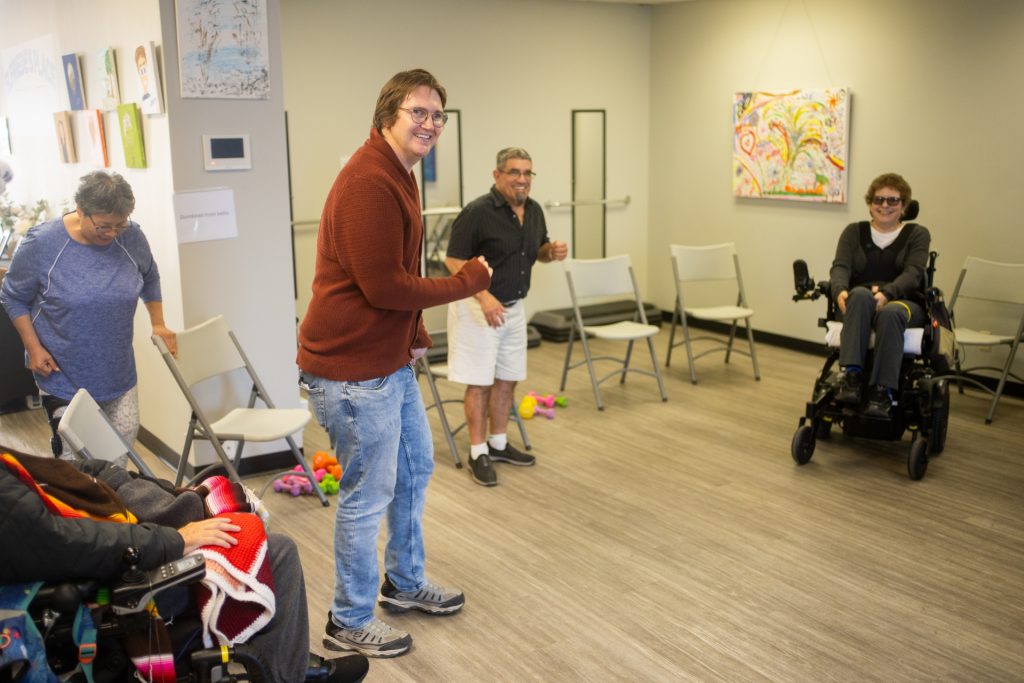
“It gives you purpose in life again,” Matt said. “It allows you to get out of the house and be sociable. Be active. If you’re sitting at home trying to recover on your own, you don’t necessarily have that.”
Colleen Maclean, a stroke survivor and long-time participant in the programs at Stroke Recovery, agrees.
“I love coming. It’s so uplifting here,” Colleen said of the exercise program. “And just to get moving and be with this community, it’s inspiring. It’s fun. It just fills me with joy.”
One of the greatest challenges in stroke recovery is social isolation. Connecting with people who have had similar experiences and understand the journey can make a world of difference during recovery.
“Knowing a lot of the focus is on the physical, which is wonderful, but the mental wellness is huge,” Colleen said. “And being able to be part of the community and being around others … and just laughter and joy, the positivity—it’s very uplifting.
“Having this space for people just to meet each other, whether it's to do exercise, do art programs, or go on outings...it just shows that you can have a normal life after a stroke.”
Not everyone who has had a stroke can easily get to the centre, but thanks to support from United Way Winnipeg donors, the Stroke Recovery Association recently purchased a SMART Board so people with more severe mobility restrictions can join the classes from home.
Donor support also helps pay for special group outings and activities.
“The funding helps immensely just to be able to have the programming twice a week with the exercise or have these outings that we’re paying for—a bus to go out to Lower Fort Garry or anything like that,” Matt said. “So just those life experience things and things that also help with recovery. Having that extra funding is massive.”
While stroke recovery can be a complex journey, Matt chooses to approach it as a challenge.
“It’s a very long process. It’s easy to get frustrated. But somebody else—whether it’s an organization like this or family members—they can see your progress better than you,” he said. “It’s frustrating day to day, but if you landmark things week to week or month to month, you’re making way more progress than you think you are.”
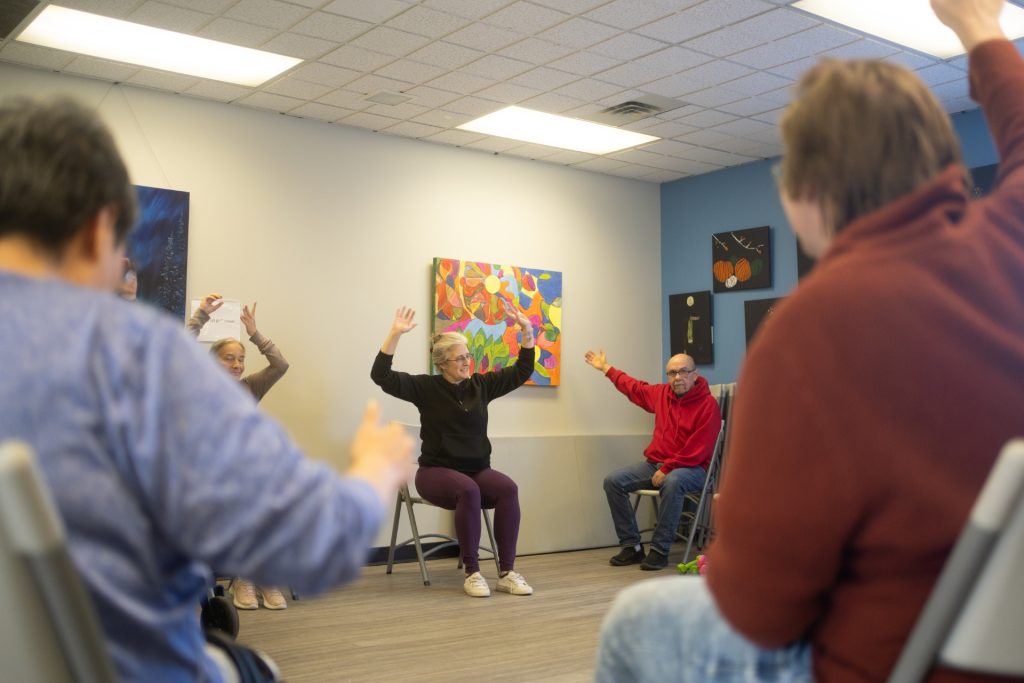
On some advice he gives to new stroke survivors, Matt says that while it can be easy to feel discouraged, it’s important to remember that you can continue to live a full, happy life after a stroke. And it all starts with connection, support, and maybe a little dancing.
“Having this space for people just to meet each other, whether it’s to do exercise, do art programs, or go on outings,” he said. “It just shows that you can have a normal life after a stroke.”